Written by Geofredo White
Did you know Tiger Woods came to Minneapolis in 1999?
Today, on what would have been Earl Woods’ birthday (March 5, 1932 – May 3, 2006), we celebrate a man whose influence extended far beyond the game of golf. Earl wasn’t just Tiger Woods’ father—he was a trailblazer, a mentor, and a champion for inclusion in a sport that had long excluded marginalized communities.
That commitment to breaking barriers led him and Tiger to Hiawatha Golf Course in South Minneapolis in 1999, where they made history.
A Full-Circle Moment in Sports History
When Tiger Woods stepped onto Hiawatha Golf Course that summer, it wasn’t just another junior golf clinic—it was a defining moment in golf’s ongoing struggle for inclusion.
Nearly 50 years earlier, Black golfers had fought for the right to play on these very fairways, making Hiawatha the first municipal golf course in Minnesota to integrate. Over a decade before the Civil Rights Act of 1964, the fight for equality in golf had already been playing out in South Minneapolis.
Now, the most famous golfer in the world stood on the very course that symbolized that struggle, continuing the legacy of breaking barriers.
Earl’s Mission Went Beyond Golf
But while Tiger was there to inspire the next generation, Earl Woods had a different mission.
He wasn’t just watching his son’s clinic—he was in South Minneapolis’ toughest neighborhoods, speaking directly to Black fathers about mentorship, responsibility, and the importance of being present for their children.
At the Center for Fathering in South Minneapolis, Earl spoke to men from communities where 78% of households lacked a father figure. He knew that mentorship and fatherhood were just as important as any golf lesson.
Hiawatha: A Civil Rights Landmark in Golf
Hiawatha Golf Course holds a special place in civil rights history—not just in Minneapolis, but in the national fight for racial equality in sports.
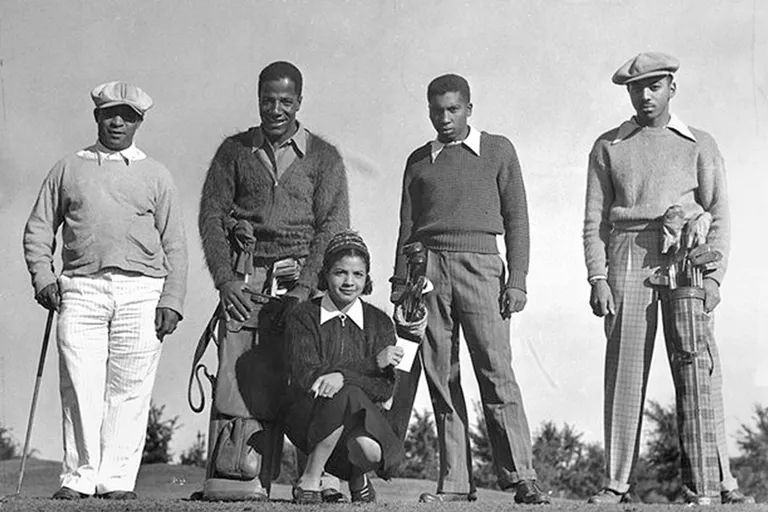
In 1952, Black golfers gained access to Hiawatha’s facilities, making it the first integrated municipal golf course in Minnesota. This wasn’t just about playing golf—it was about fighting for the right to exist in a sport that had shut them out.
A key figure in that fight was Solomon Hughes Sr., one of the greatest Black golfers of his era. A longtime Minneapolis resident and champion of inclusion in the sport, Hughes was repeatedly denied access to PGA Tour events because of his race.
Hiawatha became a safe haven for Hughes and other Black golfers from the Twin City Golf Club, men who defied exclusion and played where they had once been unwelcome.
Their fight paved the way for future generations—including the young Black golfers watching Tiger Woods that day in 1999.
Why This Still Matters Today
Hiawatha Golf Course is more than just a place to play—it’s a symbol of inclusion, mentorship, and the power of public golf courses to change lives.
Today, as cities across the country debate the future of municipal golf courses, Hiawatha serves as a reminder of why these spaces matter. They aren’t just green fairways—they’re hubs of community engagement, economic opportunity, and social mobility.
Earl Woods understood that. His son carried on that legacy. And the thousands of kids who attended the 1999 golf clinic at Hiawatha witnessed it firsthand.
Honoring Earl Woods’ Legacy
Earl Woods’ impact went far beyond raising a champion—he championed access, opportunity, and mentorship. His belief that golf should be a sport for everyone is a legacy worth celebrating and protecting.
So today, on Earl Woods’ birthday, we honor his vision.
• We honor the fathers he inspired.
• We honor the kids he encouraged to dream.
• And we honor the golf course in South Minneapolis that stands as a monument to the fight for inclusion in the sport.
Want to learn more about Tiger and Earl Woods’ impact on Hiawatha Golf Course and South Minneapolis? Read the original coverage of their historic 1999 visit here: ESPN/AP Archive.