
Listen here
Americans have long organized their lives around one thing: proximity to work. People lived near the factory or the metropolitan core. Sprawling suburbs were built from the ground up with the daily commute in mind. Wider roads, bigger parking lots, congested cities.
Then something changed: high-speed internet made it possible for many people to work and shop from home. Even visits to the doctor are happening online. The question now is not necessarily “How bad is the commute?” but “Where do I really want to live?”
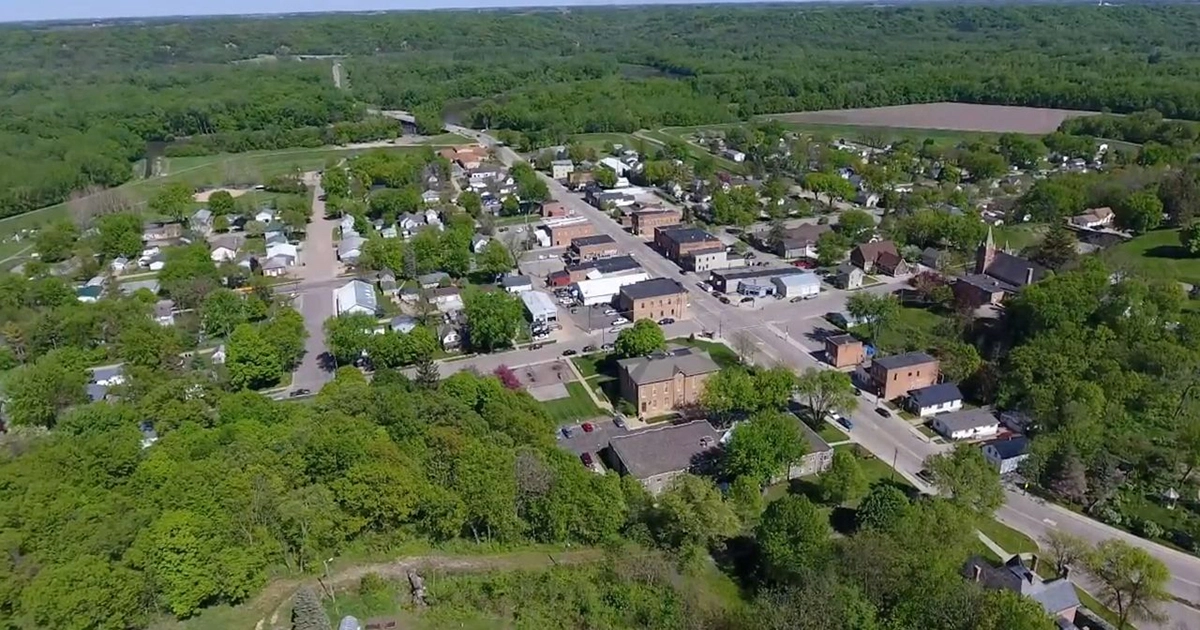
Welcome to Henderson. What’s happening here, under the radar for most Minnesotans, is a renaissance. Founded in 1852 as one of the first cities in Minnesota Territory, Henderson has had its ups and downs but has now created a community with spectacular natural surroundings and recreational opportunities; a downtown offering opportunities for new businesses; and an excellent school system. Where do you really want to live? The answer might be a town like Henderson.
Just under an hour from Minneapolis, and half that time to the greater Mankato area, visitors and residents alike can leave behind traffic congestion and commercial sprawl to immerse themselves in a community where nature still dominates the landscape. Much of the surrounding Minnesota River Valley has been preserved as state and federal wildlife areas, creating a natural environment that “development” cannot match.
On the down side, the Minnesota River is notoriously flood-prone. For decades, springtime floods inundated two or three of the four roads into Henderson. Businesses struggled to survive. Residents were seriously inconvenienced. Vistors stayed away. But finally, after years of persistence, city leaders persuaded state and county officials to raise the two most vulnerable roads out of the floodplain. The work on one of the roads was completed in 2025, and the other will reopen later this year. And while they were waiting for the roads to get fixed, city officials and residents quietly plugged away at improving the quality of life in other ways.
Henderson began as a hub for prairie-bound settlers; it was the original gateway to western Minnesota. But as transportation moved from riverboats and oxcarts to railroads, economic growth moved with it. Henderson entered a long period of relative quiet. Unlike many communities that reinvented themselves by promoting development, though, Henderson simply remained Henderson. As mayor Keith Swenson puts it, Henderson and its environs became “the land that time forgot.”
Ironically, today that may be its greatest asset. What once was forgotten is now getting a second look. What seemed isolated now feels peaceful. What looked underdeveloped is being appreciated as preserved. What was considered out-of-date suddenly looks like a viable model for the future.
Current-day Henderson was built up in the mid-to-late nineteenth and early twentieth centuries out of locally sourced brick. More than a dozen buildings on Main Street have been restored and have earned recognition on the National Registry of Historic Places. A drive down Main Street feels like time travel.
Despite its relative obscurity, Henderson does have a bit of a reputation as an eventful place. The famous Tuesday night Roll-Ins draw hundreds of classic cars and visitors every Tuesday night from June through early October. The last weekend in June is Sauerkraut Days. As Henderson historian Arlene Busse explains, the festival was created during the Depression “when they had to think of something to elevate the mood of the community,” and it remains a regional favorite to this day. On the third Saturday in August, the Hummingbird Hurrah celebrates the fact that Henderson attracts ruby-throated hummingbirds like nowhere else in the state – so much so that in 2025 community volunteers established the National Ruby-throated Hummingbird Center.
From the north, you drive to Henderson on the aptly named Minnesota River Scenic Byway. Or ride your bike from the brew pub in nearby Blakely on a brand-new, 8.5-mile trail to the popular ice cream shop in downtown Henderson. Along the way, thrill-seekers can take on the zip lines at Kerfoot Canopy Tours, recognized as one of the finest such facilities in the nation.
And just up the hill east of town is the Nye Nature Center. Sitting on 446 acres of blufftop land, the Center offers educational programming as well as hiking and cross-country ski trails.
Families will find a broad range of educational opportunities. The internationally recognized, innovative Minnesota New Country School has helped establish Henderson as a destination for education for more than three decades. Traditional public and parochial schools are just across the river in Le Sueur. Combine excellent schools with a strong sense of community and you get a place where children and their parents feel connected to the place where they live.
In fact, the strongest asset of Henderson isn’t found in its beautiful surroundings, historic buildings, fun events, or excellent schools. It’s the people. In interviews conducted for a recent Henderson documentary project, one theme surfaced again and again: Community. Residents described neighbors who look out for each other. Volunteers who show up. Business owners who support one another. Newcomers who are welcomed into the community. In an era increasingly defined by division, that kind of social trust has become rare, but you can find it in abundance in Henderson.
Henderson today feels less like a town clinging to the past and more like a town moving forward. A splash pad for kids of all ages is in the works. New businesses are opening in historic storefronts, and there is room for new investment. It may be the land that time forgot, but Henderson is starting to look like a paradigm for the future.
John Hickman is a writer and documentary film producer. His most recent project is the short film Historic Henderson on the Minnesota. He lives in Bloomington.





2 Responses
I would love for you to cover tonight’s council meeting you can find live on YouTube . Our Historic community was comprised and in high contention. However the council voted to accept a building ALREADY built and rented ! Voted on another that will compromise what our community has worked for a highly recognized Hummingbird Center. This was not the first meeting Henderson had. They had held a public comment to which nobody showed not even the Mayor who called the meeting. There are no inspection records on the existing building that was first met on publicly tonight however it’s already built .
Grants have been given and awarded with processes not followed. Henderson’s Historic Due process was not allowed or considered prior to construction . All meetings are live and can be viewed on YouTube .
I live-in St. Peter and drove to Henderson for about 25 years starting in 1985. I saw the changes in Henderson. Fixing up and cool paint jobs on the buildings. Lighting on the buildings for Christmas, etc. Budd and Dolores Hagen, now sadly deceased, were very instrumental in helping and encouraging the townspeople to fix up the downtown. She also started the Humming Bird Hurrah in their backyard.